
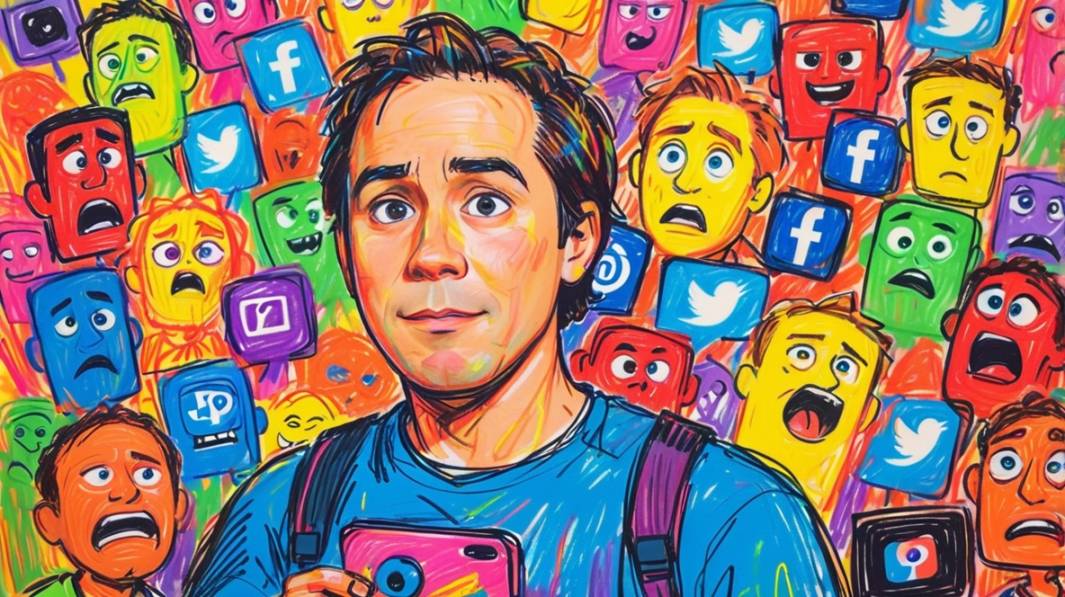
Have you ever felt like your social media feed is starting to feel… heavy? Like, you open an app for a quick laugh, but you end up scrolling through a mountain of junk, dodging aggressive ads, and occasionally stumbling into some really weird, uncomfortable corners of the internet?
If you feel that way, you aren’t alone. At https://sathwiklife.com, we’ve always been big believers in a simple idea: we need to use social media less. Especially now, in the age of Artificial Intelligence, the digital landscape is changing in ways that make it harder—not easier—to stay safe and sane.
Social media has basically turned into a minefield. Between the constant deluge of advertisements, the rise of online bullying, and the spread of complete garbage information, the “cost” of using these platforms is getting higher every day. It’s not just about your time anymore – it’s about your safety, your privacy, and your peace of mind.
The Reality Check: A Growing Crisis
The dangers we talk about aren’t just theories as they are happening right now in the headlines. To give you an idea of how serious this has become, look at what just happened with one of the biggest tech giants in the world:
Meta is in Hot Water Over some Seriously Dark Content
So, the Indian government is officially cracking down on Meta (yeah, that’s Facebook and Instagram) after some pretty disturbing reports surfaced. Basically, the Ministry of Electronics and Information Technology (MeitY) sent a stern notice to Instagram because they found content involving child sexual exploitation (CSEAM) popping up in paid ads.
Here’s the tea:
- The Problem: A BBC report claimed that Meta’s recommendation algorithm was actually promoting videos containing child abuse material. Even crazier? People saw paid ads with terms like “rape video” and “child video” that led straight to Telegram channels where this stuff is allegedly sold.
- The Government’s Stance: The government isn’t playing around. They’ve ordered Instagram to scrub all that content immediately and have seven days to explain themselves. If they don’t cooperate, Meta could face some heavy legal heat under the IT Act and the POCSO Act.
- No “Not My Fault” Defense: The government made it clear that Meta can’t just say, “Hey, that’s just a third-party user’s content.” Because these were paid ads—meaning Meta actually made money off them—they are being held directly accountable.
- Meta’s Response: Meta is trying to play it cool. Their spokesperson says they have a “zero-tolerance policy” and use AI to fight these predators, but they admit it’s a constant battle against criminals trying to hide among their billions of users.
The Bottom Line: Meta needs to fix its filters, stop the “algorithmic amplification” of this horrific content, and prove they can actually keep kids safe online.[source:Meta Told To Remove Instagram Ads Promoting Child Sexual Abuse Content: Sources]
The AI Paradox: Efficiency vs. Safety
This brings up some huge questions for Meta and the rest of the tech industry. We were told that AI was supposed to be the hero here. We were told that AI would make content moderation faster, smarter, and more accurate. But if these ads were getting approved and even promoted by algorithms, something is clearly broken.
For a long time, experts have been demanding that social media companies hire more human evaluators. Humans can understand context, nuance, and the “vibe” of a post in a way that code sometimes can’t. However, because companies are so obsessed with the profitability of AI, we’ve seen the number of human moderators being slashed all over the world.
Here is the big question: Why did Meta take this risk?
The profitability of AI moderators can be wiped out in a heartbeat if a company is found to be hosting content that actively harms children. The fines and legal fallout from stuff like the POCSO Act are astronomical. If the AI isn’t catching the worst of the worst, is the “efficiency” of AI actually worth it? Or are companies just moving too fast and hoping they won’t get caught?
Is the AI Actually Ready?
Before these companies roll out AI moderators on a massive scale, do they actually check if they work? It feels like every time we find a “fix,” the bad actors find a way around it using clever wording or basic tricks.
The problem is a double-edged sword. On one hand, AI is often too strict—it might block a legitimate medical journal or a serious legal document because it flags a “sensitive” word. On the other hand, it’s clearly not strict enough when it comes to illegal content.
We saw this recently with Grok on X (formerly Twitter). The moderation issues led to the platform being flooded with illegal materials. When the “gatekeepers” (the algorithms) fail, the internet becomes a much more dangerous place for everyone.
The Innocent Victim Problem
We also have to talk about what happens to the average person. Not everyone is tech-savvy enough to spot a predatory link or understand the hidden meanings behind certain ads. Even if someone is trying to be careful, a single accidental click can lead them down a rabbit hole.
This creates a massive problem for the law. How do you differentiate between a genuinely dangerous user who is actively seeking out illegal material and an innocent, immature person who clicked a link out of simple curiosity?
Currently, that distinction is incredibly thin. In many cases, innocent people can get flagged or get into trouble without any “guilty mind.” This is why the responsibility falls so heavily on the platforms—they need to be the wall that prevents these clicks from happening in the first place.
How to Protect Yourself
So, where does that leave us? If the platforms are struggling to keep up and the algorithms are messy, the best thing you can do is minimize your usage.
Here are a few simple tips to keep yourself safe in this digital age:
- Use it less: Try to set boundaries. Don’t let the scroll dictate your mood or your day.
- Protect your identity: Never upload personally identifiable information. The less the “machine” knows about you, the better.
- Own your presence: If you need to voice an opinion, try to do it on your own terms. Create a personal blog or a small corner of the web where you control the content. You know exactly what you’re posting there.
- Be mindful of your clicks: It’s easy to feel anxious about clicking the wrong link or searching for something that might have a double meaning. Just remember: every time you search for something potentially offensive or “edgy,” you are potentially being flagged in some unknown database.
In the era of AI, your data is the currency. Be mindful of what you share, be careful about where you click, and remember that the “free” part of social media usually comes with a hidden price tag.
Stay safe out there!
- 10 Ways to Reclaim Your Brain from YouTube Addiction and Take Back Your Life
- Why Social Media is Becoming a Minefield-and this time Instagram is feeling the heat of Indian regulators
- How to Reclaim Your Privacy on Pinterest
- A Friendly Chat About How To Be Mindful While Using Pinterest
- Back in Action: 3 Simple Strategies to Master Consistency (Even When Life Gets in the Way)