
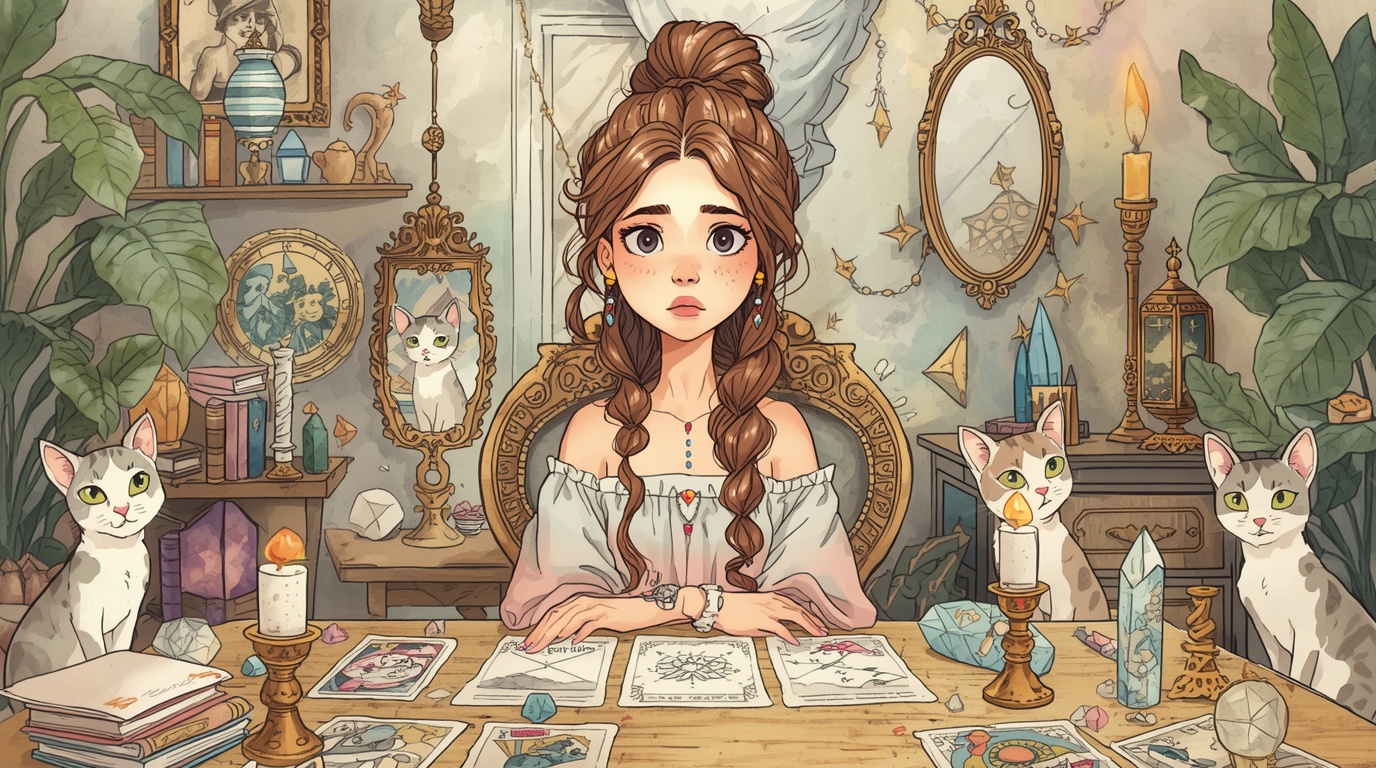
In an era defined by digital noise and the relentless pace of productivity, many of us are searching for a sanctuary—a way to reconnect with our intuition and find stillness within ourselves. While some view tarot as a mystical curiosity or a parlor trick, those who delve deeper discover that these cards are far more than mere tools for predicting the future. They are mirrors reflecting the subconscious, catalysts for growth, and companions in the journey toward self-actualization.
Whether you are a seasoned practitioner or someone curious about starting your first deck, understanding the versatility of tarot allows you to weave it into the fabric of your daily life as a sophisticated tool for mindfulness and strategic living.
From Parlors to Portals: The Evolution of Tarot
To appreciate the depth of tarot, one must first understand its lineage. Contrary to popular belief, tarot cards did not originate as mystical artifacts. In 15th-century Italy, they were known as tarocchini—essentially a deck of playing cards used for trick-taking games among the aristocracy. For centuries, their primary purpose was social entertainment and gaming.
However, as the Enlightenment gave way to the Romantic era and the subsequent rise of occultism in the 19th century, the perception of these cards shifted. Visionaries began to see patterns in the imagery—the Fool’s journey, the trials of the Swords, the emotional depths of the Cups—and recognized them as archetypes of the human experience. Over the last few hundred years, tarot evolved from a leisure activity into a profound system of divination and self-inquiry.
Today, we stand at a crossroads where tarot is no longer confined to “fortune telling.” It has transitioned into a psychological tool, bridging the gap between the conscious mind and the intuitive subconscious.
Strategic Alignment: Monthly and Daily Intentions
One of the most practical applications of tarot is using it as a framework for goal setting. When paired with Oracle cards—which typically offer more general, thematic guidance than the structured narrative of tarot—the practice becomes a powerful exercise in alignment.
Setting Monthly Goals
At the beginning of each month, consider drawing a single Tarot card and an accompanying Oracle card. The Tarot card can represent the “energy” or the challenge of the coming weeks, while the Oracle card provides the “theme” or the spiritual lesson to focus on. By documenting these draws in a journal, you create a monthly intention. Instead of blindly rushing into a new month, you are inviting yourself to move with purpose and awareness, using the cards as anchors for your ambitions.
Daily Direction
Similarly, tarot can be utilized for daily goal setting. A morning draw is not necessarily about predicting what will happen, but rather deciding how you wish to respond to the day. If you pull a card signifying patience or boundaries, you can set a conscious goal to remain composed during a stressful meeting or to protect your energy from draining influences. In this sense, tarot becomes a daily compass, guiding your behavior toward mindfulness and emotional intelligence.
The Ritualistic Dimension: Magic and Energy
For those who lean into the metaphysical, tarot cards serve as exquisite accessories in magickal rituals. Whether you are performing a full moon ritual to release old habits or a candle-lighting ceremony for manifestation, the imagery of the cards can act as a focal point for your intention.
However, before utilizing a deck as a ritual tool, it is essential to “energize” or cleanse the cards. Just as one would cleanse a crystal or a space with incense, energizing your deck ensures that you are working with a clear slate. This can be achieved through several methods:
- Smudging: Passing the deck through the smoke of sage, palo santo, or frankincense.
- Lunar Charging: Placing the deck on a windowsill under the light of a full moon to absorb celestial energy.
- Breath Work: Holding the deck and visualizing a white light flowing from your heart center into the cards.
Once energized, the cards act as conduits for your intent, amplifying the focus of your ritual and grounding your spiritual aspirations in physical form.

The Portable Talisman: Cards as Charms
The relationship between a practitioner and their deck is often deeply personal. Some find that certain cards resonate with them during specific seasons of their life. For this reason, it has become common practice to carry a specific card—or a small printed version of one—within a wallet or a jewelry locket as a charm.
Carrying the Strength card during a period of hardship or the Star card during a time of healing serves as a tactile reminder of your inner resilience. It is a subtle, private anchor that whispers a reminder of your power every time you touch your purse or glance at your wallet.
Beyond Divination: Shadow Work and Self-Inquiry
While many are drawn to tarot for “answers,” the true potency of the cards lies in their ability to facilitate shadow work—the process of exploring the hidden, repressed, or ignored parts of our psyche.
Instead of asking, “Will I get the promotion?” (a divination question), one might ask, “What internal block is preventing me from stepping into my leadership power?” (a self-inquiry question).
Tarot allows us to analyze the pros and cons of life decisions through a different lens. By laying out cards for various paths, we are not predicting fate; rather, we are stimulating our intuition to recognize signals we may have been ignoring. The cards often highlight the “blind spots” in our logic—the hidden fears or secret desires that influence our choices from the shadows. This process of self-interrogation transforms the deck into a mirror, forcing us to confront truths that we might otherwise avoid.
The Sanctuary of the Shuffle: Tarot as Self-Care
In an age of endless scrolling and digital saturation, the act of spending time with tarot is a radical form of self-care. There is something profoundly grounding about the tactile sensation of shuffling cards, the weight of the deck in your hands, and the silence required to interpret an image.
Engaging with tarot requires you to step away from the screen and enter a state of presence. It encourages a slow, meditative pace of thought that is rarely found in our notification-driven lives. Whether it is ten minutes of morning reflection or an hour of journaling on a Sunday afternoon, this practice creates a boundary between you and the digital world, allowing you to return to your own center.
Conclusion: A Tool for the Modern Soul
The beauty of tarot lies in its flexibility. It can be a spiritual guide, a psychological mirror, a productivity tool, or a simple hobby. Whether you believe in the magickal properties of the Arcana or view them as mere ink and cardstock, their utility is undeniable.
By integrating these cards into your life—through goal setting, shadow work, or mindful rituals—you cultivate a habit of introspection and intentionality. Ultimately, tarot is not about knowing the future; it is about understanding the present so deeply that you gain the power to shape your own destiny. In the quiet shuffle of the deck, we find not just answers, but the courage to ask better questions.