
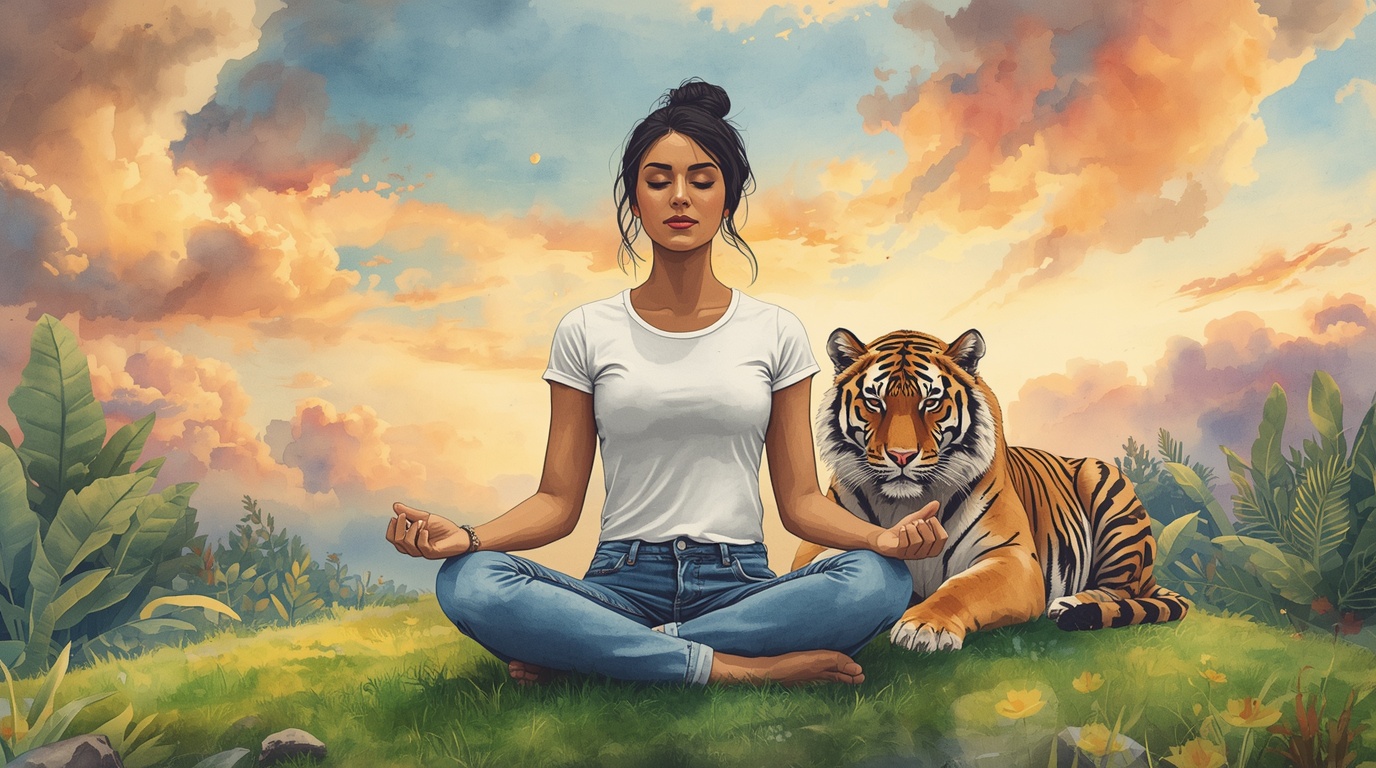
For the longest time, I lived my life like a browser with fifty different tabs open at once—all of them playing audio, and half of them freezing. I was constantly rushing, always anxious about the next deadline, and perpetually exhausted despite sleeping eight hours a night. My mind felt like a chaotic city during rush hour; there was just too much noise to actually hear myself think.
That all changed when I stumbled upon the concept of meditation. Now, if you’ve never tried it, let me clear something up: meditation isn’t about “emptying” your mind or turning into a human vegetable. At its core, meditation is simply the practice of training your attention and awareness. It’s the art of observing your thoughts without getting swept away by them. It’s like sitting on the bank of a river and watching the water flow past, rather than jumping in and getting dragged downstream by every passing emotion or worry.
As I started digging deeper, I noticed a recurring pattern. Some of the highest-performing people in the world—CEOs of Fortune 500 companies, Olympic athletes, and visionary tech moguls—all had one thing in common: they meditated daily. I used to think these people were just “wired” differently or had some secret genetic advantage for focus. But then I realized that their mental clarity wasn’t a gift; it was a habit. They weren’t meditating because they had nothing to do; they were meditating because they had so much to do. They used it as a tool to sharpen their minds, reset their nervous systems, and maintain an edge of calm in the middle of high-pressure environments.
When I first started, I felt completely lost. I didn’t know how to “do” it. Thankfully, I discovered that meditation isn’t a one-size-fits-all practice. There are so many different flavors depending on what your brain needs at the moment.
I started with basic Breathwork or Mindfulness Meditation. This is the entry point for most of us. It’s simple: you sit quietly and focus on the sensation of air entering and leaving your nostrils. Whenever your mind wanders (which it will, a thousand times), you gently bring it back to the breath. It sounds almost too simple to work, but that’s the magic—the “work” is in the act of returning to the present moment.
Then, I explored Vipassana, which translates to “insight meditation.” This is a bit more intense. Instead of just focusing on the breath, Vipassana encourages you to observe physical sensations in the body without reacting to them. It teaches you a profound sense of equanimity—the ability to experience pain or discomfort without letting it ruin your mood.
I’ve also dabbled in Guided Meditations, where an instructor leads you through a visualization or a “body scan.” For someone like me, whose mind likes to run marathons while sitting still, having a voice to guide me back to center was a lifesaver in the beginning.
But why did I actually stick with it? Why did this move from a “New Year’s resolution” to a non-negotiable part of my morning? Because meditation fundamentally changed how I cope with life.
First and foremost, it became my primary weapon against anxiety. Before I started meditating, anxiety felt like a constant background hum—a subtle vibration of dread that I couldn’t quite shake. Meditation gave me a “pause button.” Now, when I feel a panic spike or a wave of worry, I can recognize it in real-time. Instead of saying, “I am anxious,” I can say, “I am experiencing a feeling of anxiety.” That tiny shift in perspective creates a gap of calmness that prevents the emotion from overwhelming me.
Secondly, my ability to focus skyrocketed. In an age of TikTok and endless notifications, our attention spans have been shredded. I used to struggle to read five pages of a book without checking my phone. Meditation is essentially “weightlifting for the brain.” By repeatedly bringing my focus back to my breath, I was training my concentration muscle. Now, when I sit down to work, I can enter a state of “deep work” much faster and stay there longer.
Thirdly, it drastically lowered my overall stress levels. We often mistake “stress” for “the things happening in our lives,” but stress is actually our reaction to those things. While I can’t control the traffic, my boss’s mood, or a sudden car repair, meditation has taught me that I can control how I respond to those stressors. I no longer feel like a leaf being blown around by the wind; I feel more like the tree—the wind still blows, but my roots are deep.
One of the things I love most about this practice is that it is the ultimate form of self-care because it’s completely free. We live in a world where “wellness” has been commodified. People will tell you that you need a $100 yoga mat, a fancy membership to a spa, or expensive supplements to feel better. But meditation requires absolutely nothing but your own existence. You don’t need a special room, expensive clothes, or a guru. It is a gift you give yourself that costs zero dollars and takes only a few minutes of your day.
Lastly, for those who are interested in the spiritual side of things—as I have become—meditation is the gateway. Whether you call it spirituality, consciousness, or just “getting in touch with your soul,” meditation allows you to peel back the layers of your ego. It helps you realize that you are not your thoughts; you are the observer of those thoughts. This shift leads to a deeper sense of connection with the world around you and a feeling of peace that doesn’t depend on external circumstances.
Looking back, starting a meditation practice was one of the best decisions I ever made. It didn’t make my problems disappear—I still have bad days, stressful weeks, and moments of doubt—but it gave me a sanctuary to return to. It taught me that while I cannot control the storm outside, I can always find the stillness within. If you’re feeling overwhelmed or just feel like your mind is too loud, I highly recommend giving it a try. Just sit, breathe, and watch the river flow.